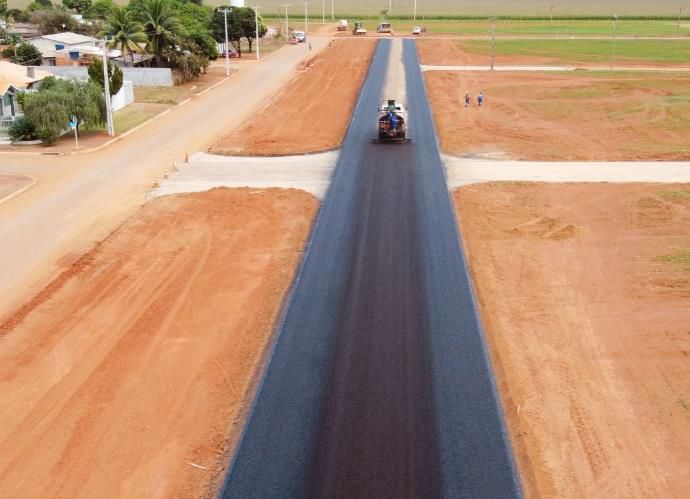



The purpose of the pavement layer design is to reduce the pressure on the lower layer, thus reducing the load required in the first layer, so that the bed only accepts part of the demand. The pavement can be defined as the following layers: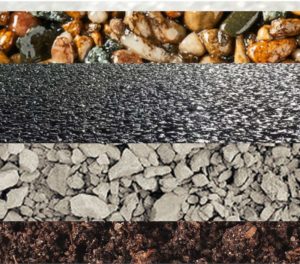
1. Coating
2. Base
3. Subbase
4. Subgrade Reinforcement
5. Sub-deal
Binding layer: as the name suggests, this layer has the function of binding the asphalt coating with the base.
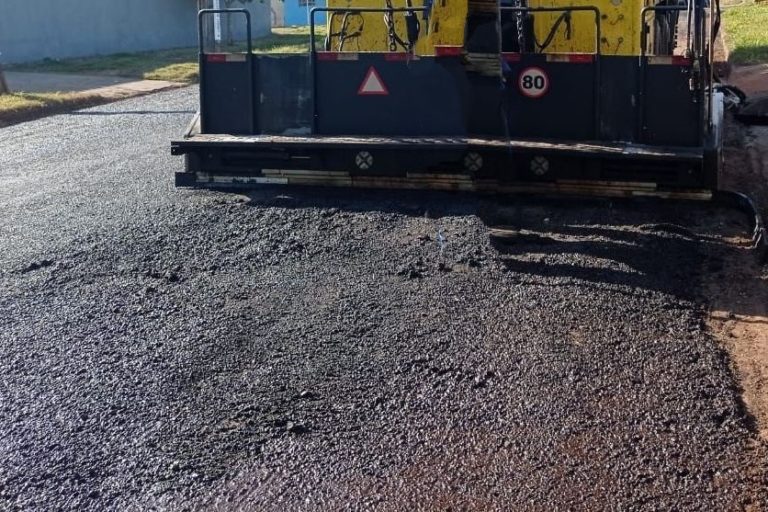
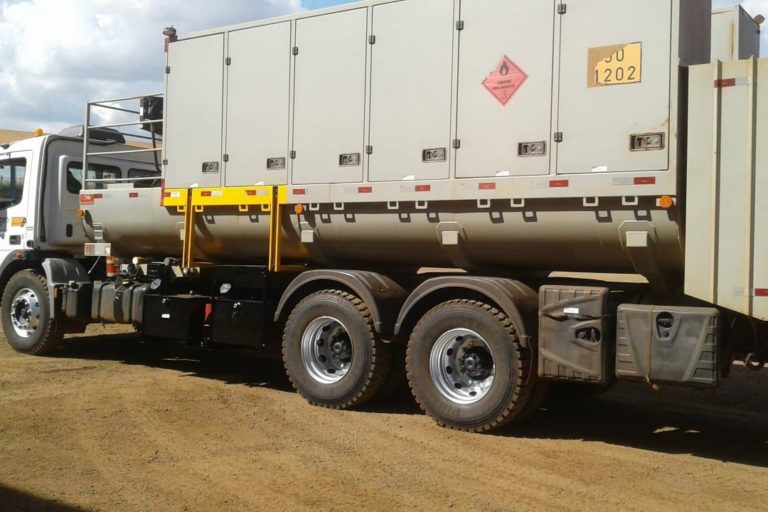
Asphalt spreaders are the equipment responsible for printing the roadway under construction. It is this equipment that, in paving operations, sprays emulsion on the base of asphalted roads.
1 – Definition
The sprinklers have the purpose of applying an asphalt material in the form of a film on the surface of a landfill or an untreated material (sub-base or gravel) or on an untreated granular base (compacted stone or crushed gravel).
2 – Functions
This application can have one or more of the following purposes:

Waterproofed surface
Close capillary spaces
Glue the loose particles to the surface
Harden the surface
Ease maintenance
Promote adhesion between the surface on which the first layer of asphalt will be placed
Of all these functions, in a continuous paving operation, the most important is to promote adhesion between the asphalt layers.
3 – Structural Capacity
The application of the products with the spreaders, under no circumstances, has structural support in the pavement layers.
4 – Type and quantity of material to be applied

The type and quantity of asphalt material to be applied depends mainly on the texture and porosity of the material to which it will be applied.
Specifications indicate a quantity ranging between 0.90 and 2.7 l / m².
Of course, denser, closed surfaces need less application as it will absorb less than rough, open surfaces.
5 – Maintenance and opening for traffic
The primed area can be closed to traffic between 24 and 48 hours so that the bitumen can penetrate and harden the surface.
Excess bituminous material can form puddles that should be removed with brooms or manual brooms.

The imprinted area must be cleaned with compressed air. If the weather is cold or the material has not fully penetrated the base surface, a longer period may be necessary.
Any excess bituminous material remaining on the surface after this period must be removed using an absorbent material prior to traffic clearance.
The area that was printed should be preserved until another layer is placed. The conservation work must include some material to prevent the adhesion of the layer on car tires so as not to break the surface of the asphalt binder.
In other words, any prepared surface areas, if they are damaged by vehicular traffic or otherwise, must be repaired before the surface layer is placed.
6 – Weather conditions
It is not possible to use the spreader to apply the emulsion on rainy days.
7 – Factors affecting uniform application
Asphalt Spray Temperature
Liquid pressure along the spray bar
Angle of spreader bar nozzles
Height of the nozzle holes on the applied surface
Spreader truck speed
7.1 – Asphalt Spray Temperature
The asphalt distributors have protected tanks to maintain the material temperature and are equipped with torches to reach or maintain the proper application temperature.
7.2 – Liquid pressure along the spreader bar
To maintain continuous and constant pressure along the length of the spray bar, variable discharge pumps are used.
7.3 – Angle of spreader bar nozzles
The spray angle of the nozzle holes must be properly established, generally between 15° and 30° in relation to the horizontal axis of the spreader bar so that the individual flows do not interfere with each other in the application.
7.4 – Height of the nozzle holes on the applied surface
The height of holes in the surface determines the width of an individual stream. To ensure correct overlap of each outlet, hole height must be established and maintained throughout the operation.
7.5 – Spreader truck speed
The vehicle must be equipped with a speedometer visible to the driver to guarantee constant speed, allowing uniform application of the binder in the mechanical and hydrostatic spreaders.
There is a relationship between the application rate and the spreader speed.

Easier in the option of electronic hydrostatic spreader, such as: dual tank of varied capacity, fifth wheel + tachometer, internal and external control of operations and pneumatic bar.
8 – Care in the operation of the spreaders
When it comes to asphalt spreaders, the good cost-benefit ratio can be influenced by several factors. Among them is the temperature of the material, maintained by torches that act directly on the storage tank.
Some construction companies usually load the sprinklers with cold material at the construction site and wait until the torches heat up the entire mass, something that can take hours and is not recommended.
The ideal is to load the spreader when the material is already at the temperature required on the job, as the torches should only help to maintain this heat, in addition to raising the quality of the emulsion, this practice is more productive, as it does not require the materials to be heated by the spreader for a long period of time.
Torches are dangerous components, particularly in the case of hand spreader bars or pens where the operator is in close proximity to the assemblies. Therefore, the torch should only be activated after the truck has come to a complete stop. It is also necessary to check that the general fuel valve is in the correct position, in addition to always working with the equipment clean, especially near the torches.

9 – Maintenance routine requires attention to circuit cleaning
Cleaning the boom and the spreader nozzles is one of the most important maintenance actions for the proper functioning of the equipment.
The most modern models already come with a gear pump pre-filter, that is, if a bitumen particle passes through the first sieve of the tank, it is submitted to a second filtration.
It is important that, at the end of each shift, the operator cleans the circuit, piping and bar with the spreader nozzles – using diesel oil, the only effective solvent for asphalt (closed cleaning circuit).
The equipment has a diesel tank pressurization system for washing the set at high pressure.
Author
Civil Engineer, Civil Technologist, Post Graduate in Marketing and Computer Engineering student. Speaker, professor and acting in the technical-commercial area, with international experience in national and multinational companies.
For further information: ✆ +55 19 98123-7982  latam@ldaequipamentos.com.br – Ing. Paulo Rogério Veiga Silva
Source: A importância dos Espargidores de Asfalto nas Rodovias